LOYALTY MARKETING KNOWLEDGE
The Customer Advocacy Framework:
A Guide to Motivation and Expressiveness
Here’s something I’ve noticed after years of working with loyalty programs: we talk a lot about turning customers into brand ambassadors, but we’re surprisingly bad at understanding why different people actually share, recommend, or rave about products. Some customers will write you a five-paragraph love letter unprompted. Others need a 20% discount just to click a share button. And honestly? Both approaches are valid.
The thing is, these aren’t just random behaviors. There’s a pattern here—actually, there are multiple patterns—and if you can spot them, you can build advocacy strategies that feel less like marketing tactics and more like natural extensions of how people already behave.
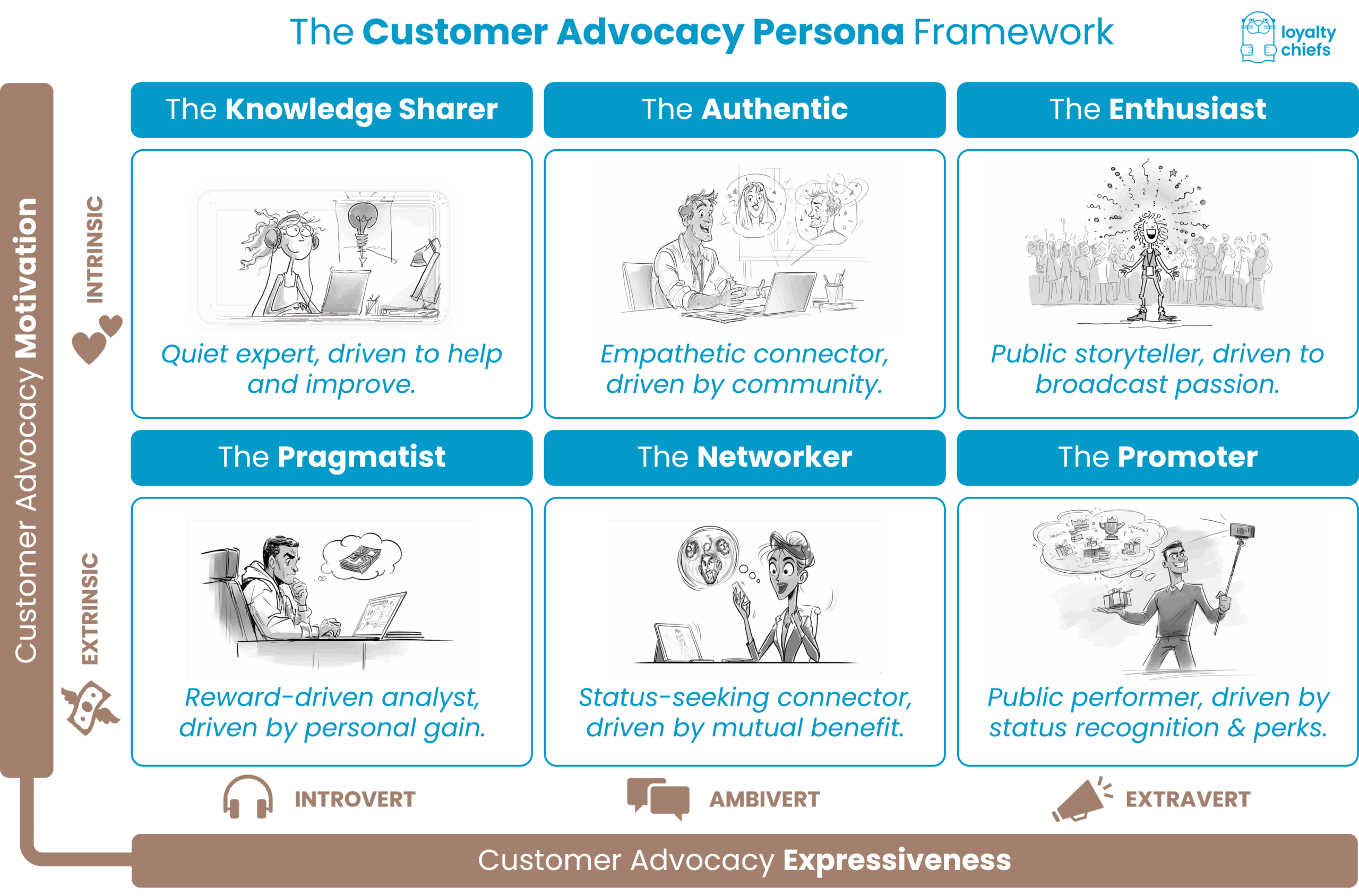
So let’s talk about building a persona framework that actually makes sense. Not the fluffy “Meet Marketing Mary, she likes yoga and rosé” kind, but something grounded in real psychological research—Self-Determination Theory, personality traits, the works—adapted specifically for advocacy behaviors like word-of-mouth, sharing, and testimonials. We’re going to create a 2×3 matrix based on two axes: motivation (intrinsic to extrinsic) and expressiveness (introverted to extraverted). Six personas total. Practical, not overwhelming.
The “Axes” of the Advocacy Persona Framework
Before we meet the actual personas, let’s dig into what makes these axes tick. This isn’t arbitrary—it’s rooted in psychological research about why people do what they do.
The Motivation Axis: Intrinsic vs. Extrinsic
Motivation is your “why.” According to Self-Determination Theory, intrinsic drivers come from within—joy, personal values, the satisfaction of helping others. These fuel behaviors like organic testimonials that keep happening long after the initial spark. Extrinsic drivers are external: points, discounts, status badges. They’re fantastic for scaling referrals quickly, but here’s the catch—pile them on too thick and they can actually undermine the intrinsic joy people felt in the first place.
High-Extrinsic customers respond to tangible incentives.
A discount for a referral, VIP access for a testimonial—that’s what moves them. Perfect for viral sharing campaigns and quick bursts of activity, but you need to balance it with intrinsic elements or risk advocacy burnout*.
The Expressiveness Axis: From introvert to extravert
Expressiveness is about how people prefer to show their advocacy, and it’s tied directly to the introversion-extraversion spectrum. Introverts recharge in solitude and favor deep, one-on-one interactions. Extraverts get energy from crowds and excel in public forums. Ambiverts blend both, adapting fluidly based on context.
The modest Introverts may have lower social energy for large crowds, but they excel at thoughtful, detailed interactions. They don’t need the stage; their strength lies in the written word and one-on-one connections. They don’t scream for attention, so their contributions are often perceived as highly authentic. Their impact might be less visible, but it is deep and considered
Ambiverts are the chameleons of your customer base; they adapt effortlessly to the context
Extraverts gain energy from social interaction and thrive in the spotlight
The Six Customer Advocacy Personas
Alright, now for the good stuff. Let’s meet the six personas that emerge from our matrix. Each one gets a description of core traits, preferred advocacy behaviors, and practical activation tips. You’ll recognize some overlap with existing frameworks—Forrester’s “validators,” Khoros’s “status seekers”—but we’re emphasizing our specific axes for precision.
High-Intrinsic Personas: Powered by Passion
These folks are your authenticity engines. They promote because it aligns with who they are, and that creates incredibly credible word-of-mouth.
The Knowledge Sharer (High-Intrinsic, Introvert)
These are your quiet experts. They craft detailed, insightful reviews not for applause, but because sharing knowledge genuinely satisfies them. They’re the ones helping fellow consumers avoid mistakes, contributing to forums, and providing thoughtful feedback—all without needing their name in lights.
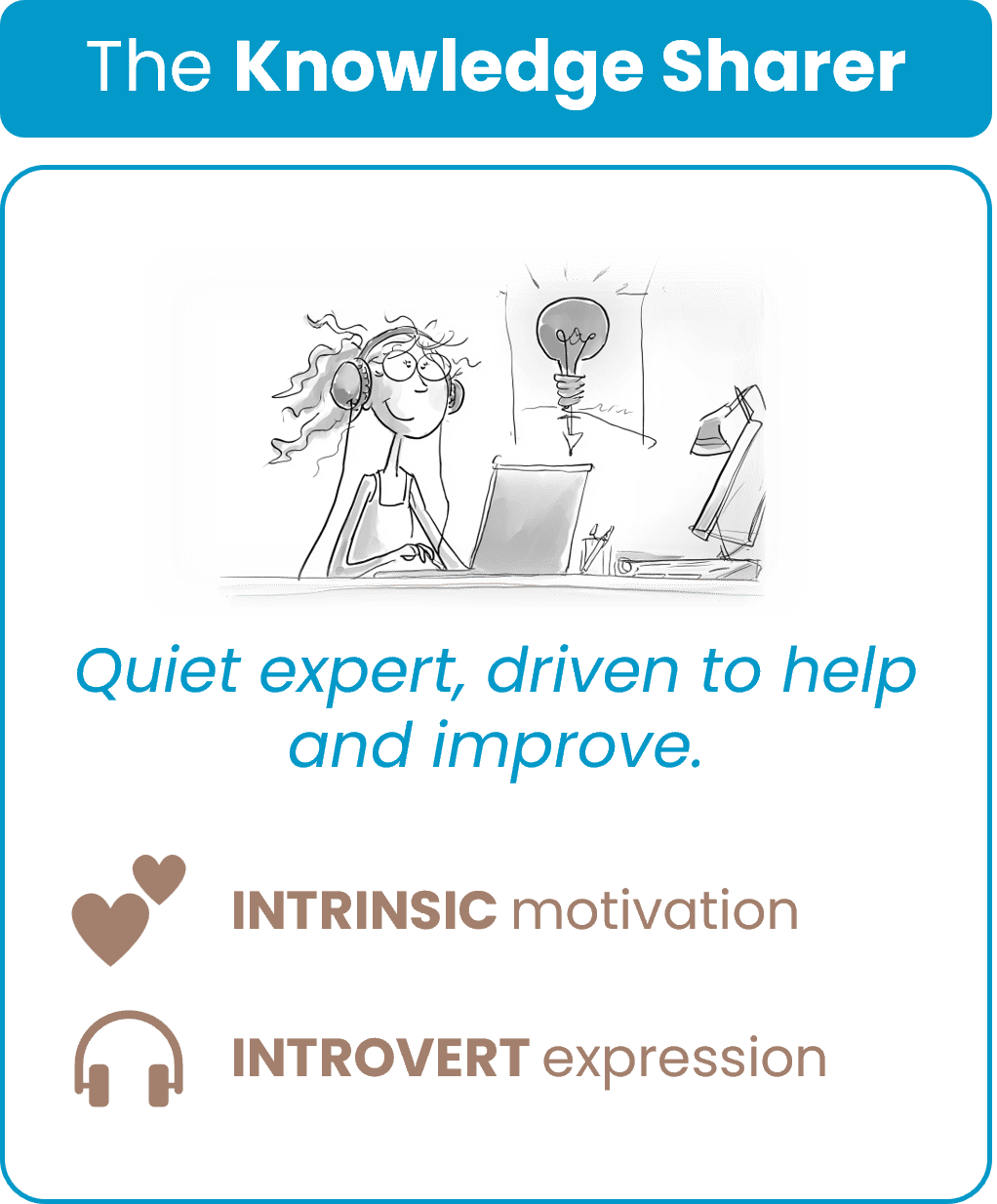
Key Traits: Reflective, detail-oriented, motivated by personal growth and meaningful knowledge exchange. High social demands? That’s their kryptonite.
Preferred Behaviors: In-depth written testimonials, private word-of-mouth via email or one-on-one conversations, innovation feedback submissions. They thrive in feedback loops and content creation but avoid flashy social sharing.
How to Activate Them: Respect their space. Give them private feedback portals or send personalized thank-you notes. Feature their contributions (anonymously, if they prefer) in newsletters to reinforce that intrinsic satisfaction. In retail loyalty programs, send targeted surveys post-purchase to tap into their expertise
The Authentic (High-Intrinsic, Ambivert)
Balanced and empathetic, these advocates express genuine enthusiasm through whatever channel feels right in the moment. They’re driven by real connection and self-expression, switching modes effortlessly between private and public.
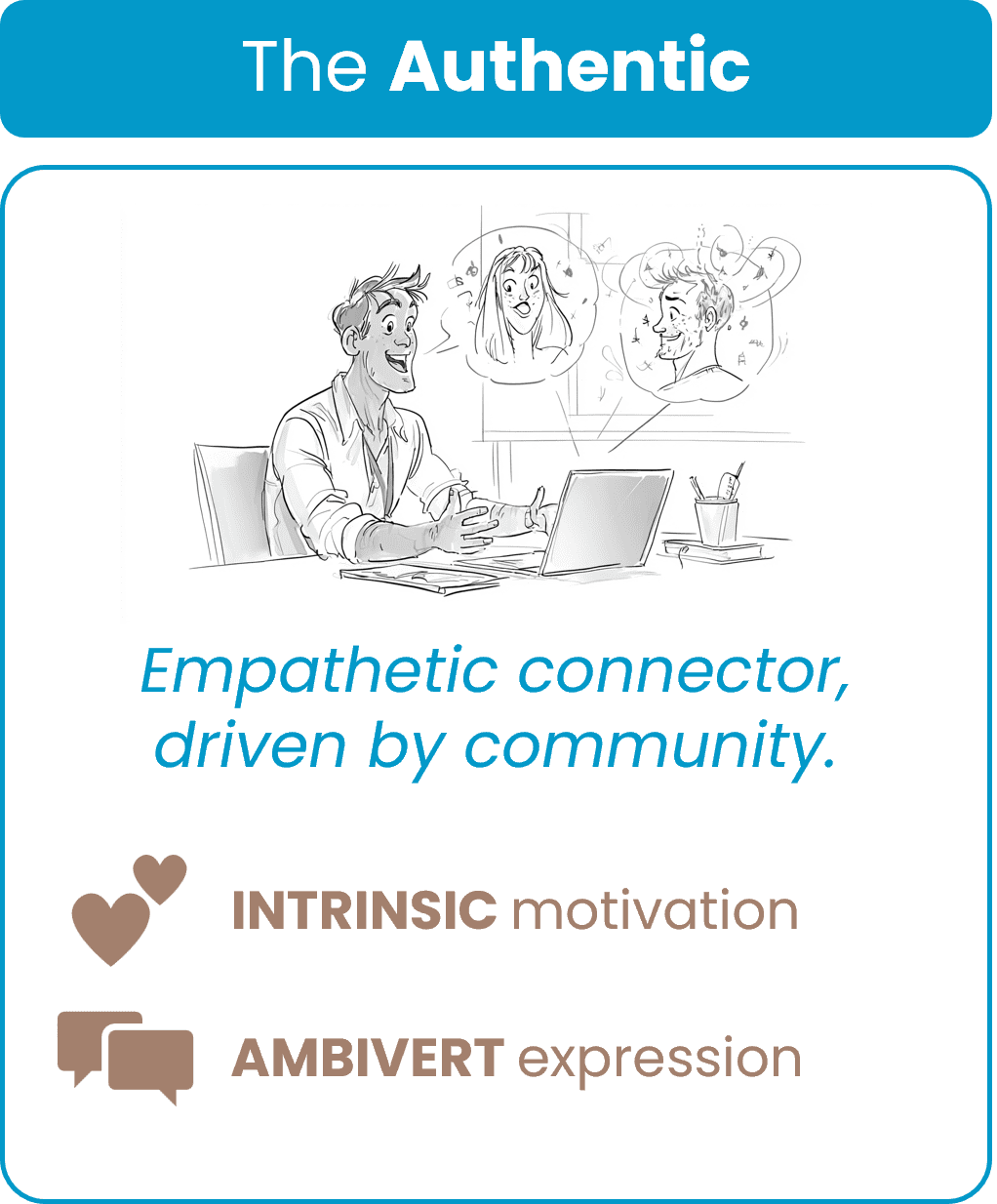
Key Traits: Adaptable, empathetic, motivated by building authentic community bonds. They read the room and adjust accordingly.
Preferred Behaviors: Moderate social sharing (heartfelt LinkedIn posts, for example), community testimonials, selective referrals within trusted networks. They move fluidly across social promotion and personal endorsements.
How to Activate Them: Offer flexible tools—opt-in share buttons in apps paired with story-spotlighting like “Your experience inspired us.” For supermarket loyalty apps, integrate story-sharing prompts during routine shopping that let them contribute when inspiration strikes.
The Enthusiast (High-Intrinsic, Extravert)
Vibrant, inspirational storytellers who are genuinely passionate about your brand and can’t wait to tell everyone about it. They get energy from rallying others and have zero shortage of it.
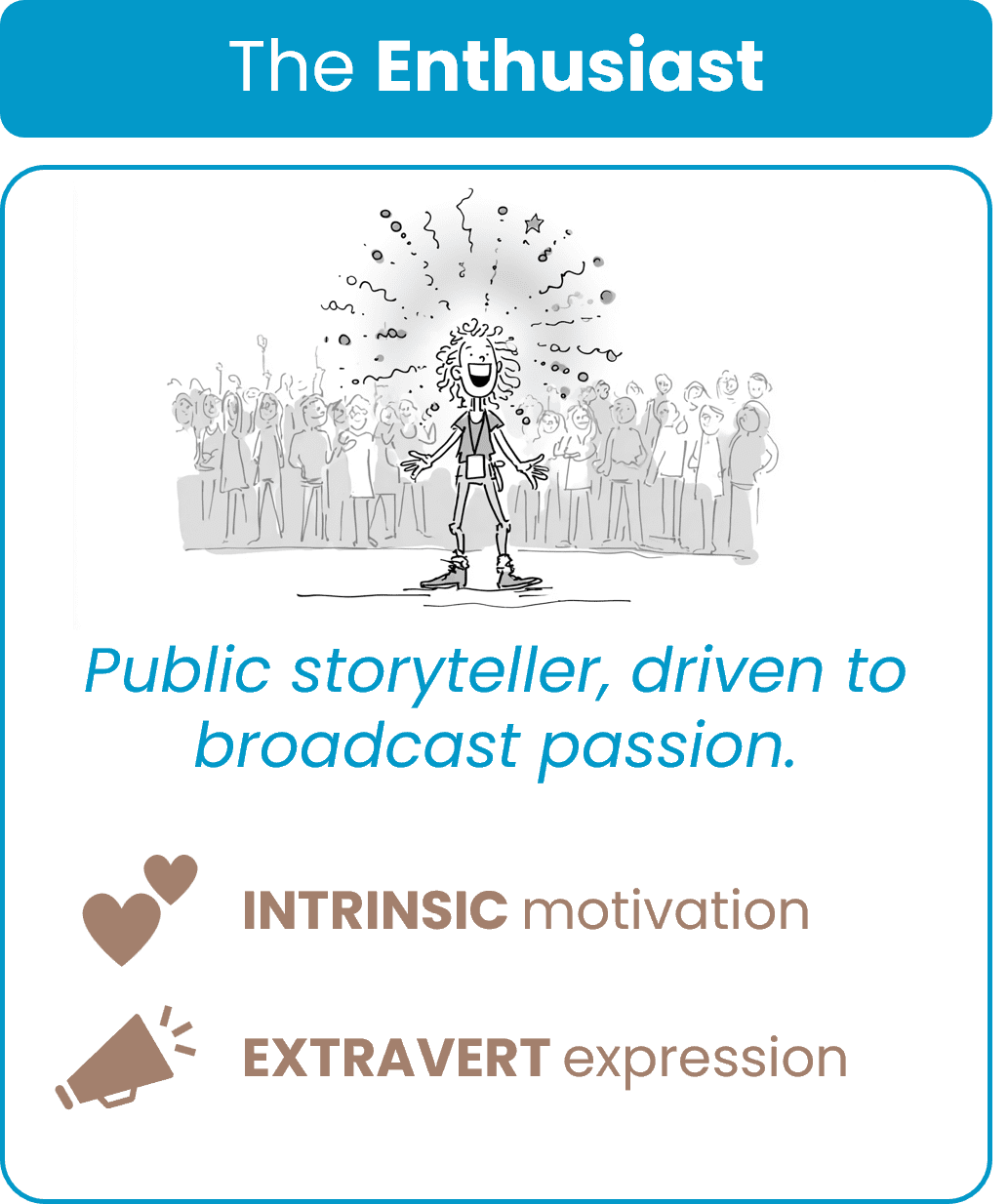
Key Traits: Outgoing, charismatic, motivated by the thrill of positive influence. High interaction energy is their natural state.
Preferred Behaviors: Energetic word-of-mouth at events, public video testimonials, leading group recommendations. They dominate social promotion and community building.
How to Activate Them: Host ambassador webinars or live sessions where they can shine. Co-create content that amplifies their natural energy. In B2B referral programs, invite them to client meetups—they’ll network naturally and enthusiastically.
High-Extrinsic Personas: Driven by Rewards
These are your opportunity maximizers. Give them clear value propositions and watch them become referral powerhouses. The key is getting the incentive structure right.
The Pragmatist (High-Extrinsic, Introvert)
Calculated contributors who quietly assess whether advocacy is worth their while. When it is—when there’s a tangible benefit—they’ll act, but always behind the scenes rather than in the spotlight.
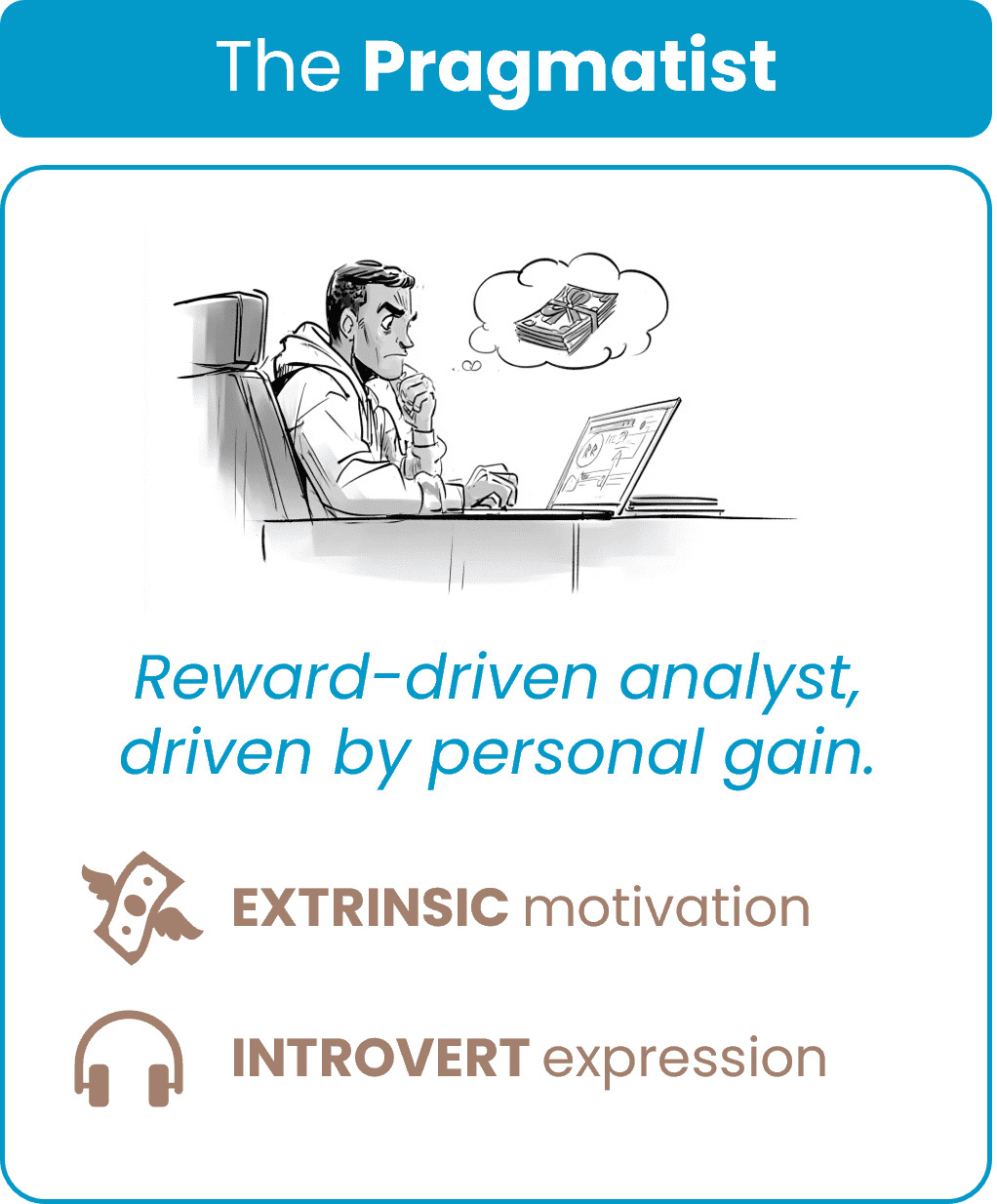
Key Traits: Practical, analytical, driven by utility like discounts or efficiency gains. They prefer having impact without fanfare.
Preferred Behaviors: Link-based referrals, reward-triggered reviews, private testimonials in exchange for perks. They fit perfectly into referral and feedback loops via discreet channels.
How to Activate Them: Automate low-effort rewards—instant credits for email shares, for instance. Use analytics to nudge them during high-value moments like post-upgrade. Perfect for e-commerce loyalty programs where privacy matters.
The Networker (High-Extrinsic, Ambivert)
Strategic connectors who leverage their relationships for mutual benefit. They understand networking as a two-way street and are comfortable operating in varied settings—from intimate conversations to semi-public forums.
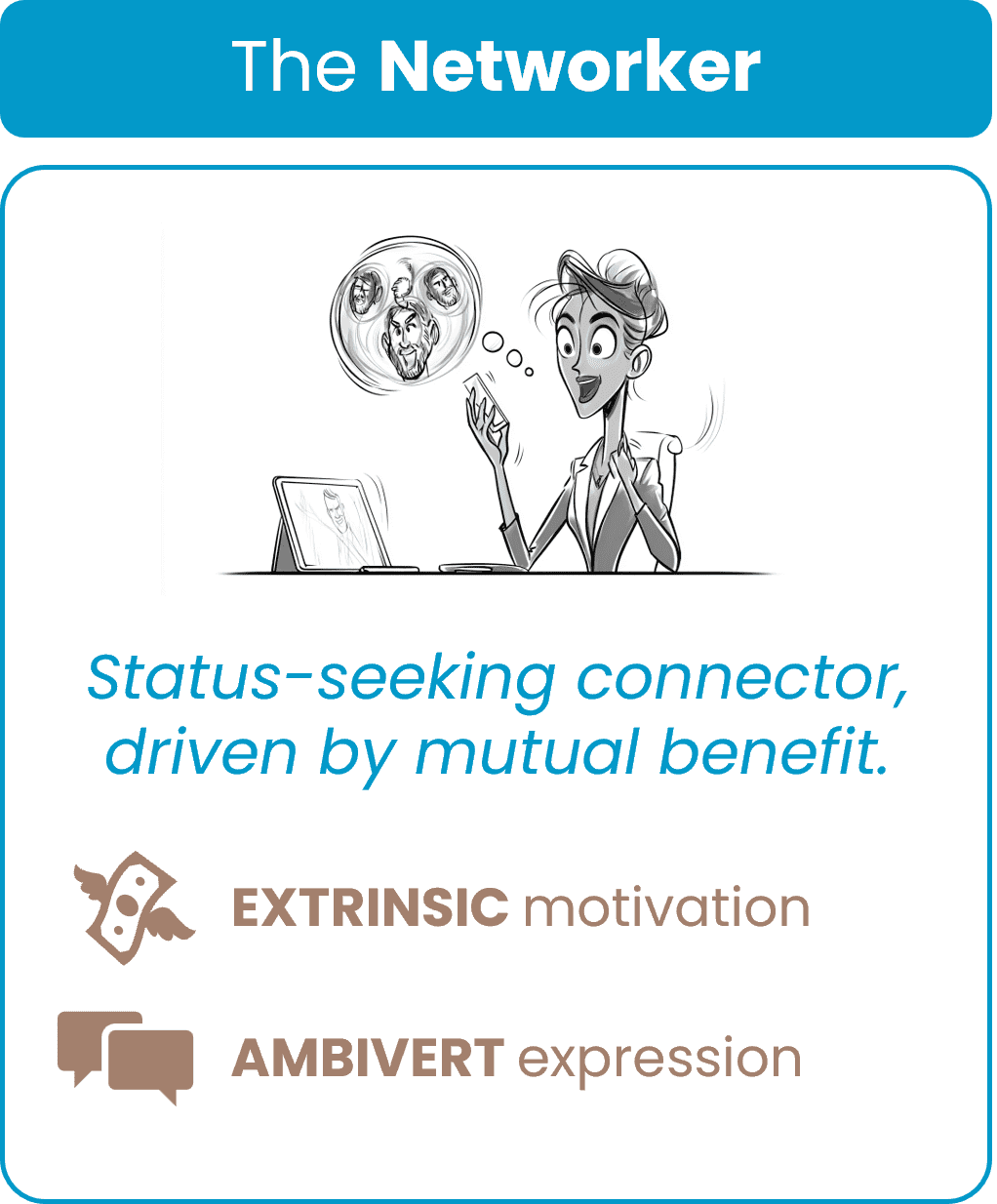
Key Traits: Relational, opportunistic (in the best way), motivated by status and reciprocity. Context-switchers extraordinaire.
Preferred Behaviors: Tagged social shares, professional network referrals, badge-earning testimonials. They navigate content creation and customer acquisition equally well.
How to Activate Them: Gamify with semi-public leaderboards or points systems. Personalize outreach through your CRM for timely, relevant incentives. In professional services, tie rewards to networking events they’re already attending.
The Promoter (High-Extrinsic, Extravert)
Dynamic, charismatic influencers who want visibility and rewards in equal measure. They turn advocacy into performance art—and they’re really good at it.
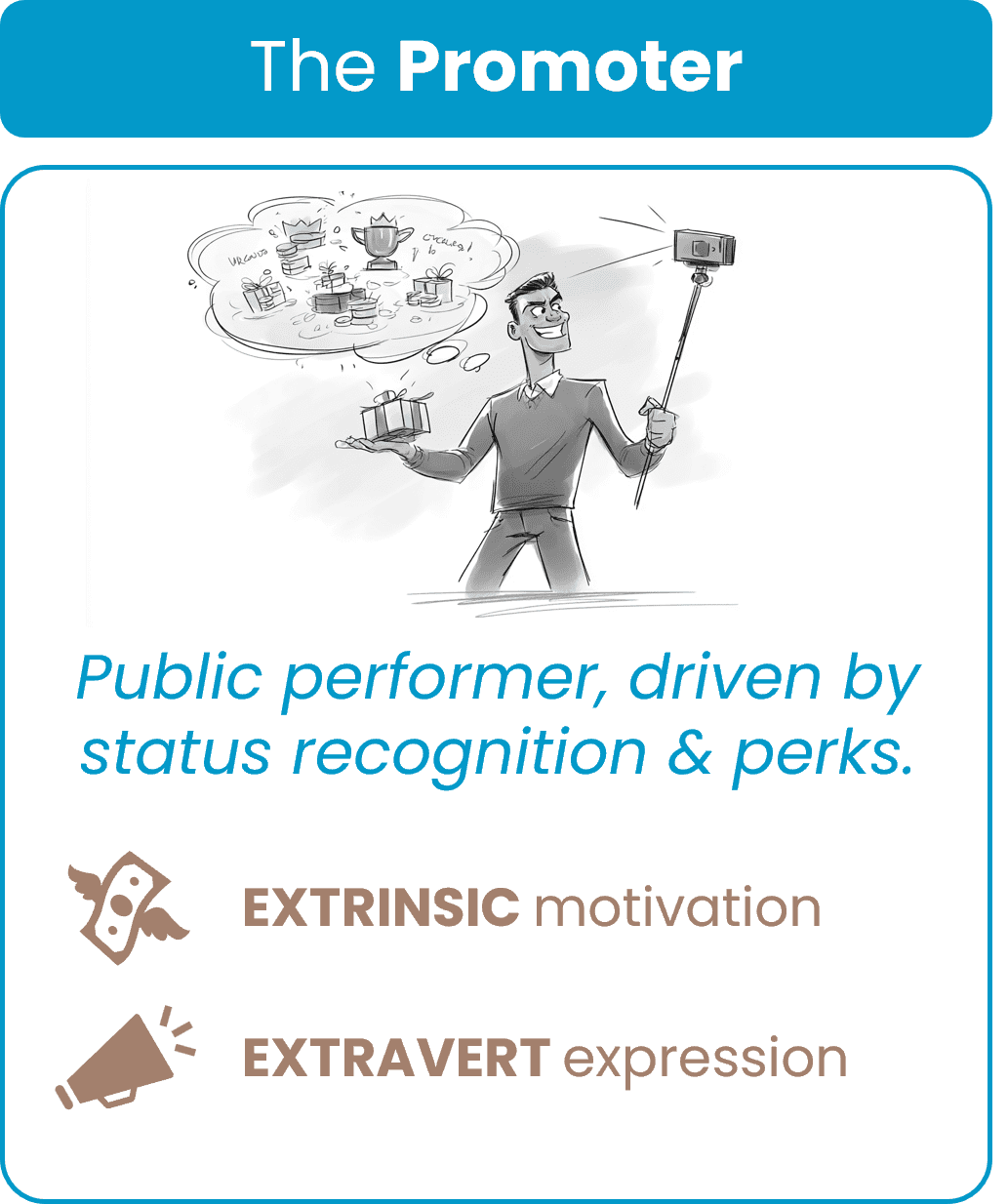
Key Traits: Outgoing, reward-focused, energized by recognition and crowds. They want scalable impact they can measure.
Preferred Behaviors: Viral public posts, event-based testimonials, status-driven group referrals. They excel at social promotion and live events.
How to Activate Them: Offer high-visibility prizes—VIP shoutouts, affiliate commissions, spotlight features. Give them performance dashboards to track their impact. For social-media-heavy brands, partner with them on influencer-style campaigns.
Wrapping Up: Unlock Advocacy with Precision
This 2×3 persona framework isn’t revolutionary—it’s evolutionary. It takes established psychological research and sharpens it specifically for customer advocacy. By focusing on motivation and expressiveness, you transform passive loyalty into active ambassadorship, driving word-of-mouth, reviews, and referrals that feel natural rather than manufactured.
Whether you’re in retail, SaaS, or somewhere else entirely, start small. Map a subset of your customer base. Test one activation strategy per persona. See what resonates. The payoff—deeper relationships, higher retention, compounding growth—is worth the effort.
What’s your first step going to be?

Office
Loyalty Chiefs
Keizerstraat 53
4201 XN, Gorinchem
The Netherlands
Numbers
Phone: +31-647412291
VAT: NL004263428B93
KVK: 86492365
IBAN: NL91KNAB0505416379
